

News
Nurturing Pre-K Children Leads to Improved Learning Skills
It’s early in the school day at Lynn Road Elementary School. There are 16 four-year-olds sitting cross-legged on their puzzle piece foam mats taking part in group time. The children are listening as one child tells his teacher and friends about a problem he faced earlier that morning. When the little boy finishes his story, the teacher reaches for the Solution Suitcase and the group conversation turns to problem solving.
Preparing children for success in kindergarten
This Wake County Public School System (WCPSS) teacher is actively using the Social and Emotional Foundations for Early Learning (SEFEL) model of instruction. This nationally recognized framework supports teachers in their use of techniques that promote the social emotional development and school readiness of children birth to age five through intentional and nonpunitive practices.
“We see many children entering kindergarten who lack the skills that will allow them to be successful,” said Gay Lytton, Director of Preschool Programs, WCPPS. “If a child has difficulty expressing and regulating their emotions, and interacting with others, then their ability to learn is hindered.”
Through a John Rex Endowment grant, WCPSS increased its number of SEFEL coaches enabling 86 preschool teachers to receive progressive training and individualized in-classroom coaching.
These teachers are integrating SEFEL practices into their daily interactions with children and parents. Classrooms are alive with teachers supporting positive environments such as modeling friendship skills, providing choices within group times, sincerely speaking with children about their ideas and feelings, and celebrating positive social interactions.
The connection between positive mental health and learning
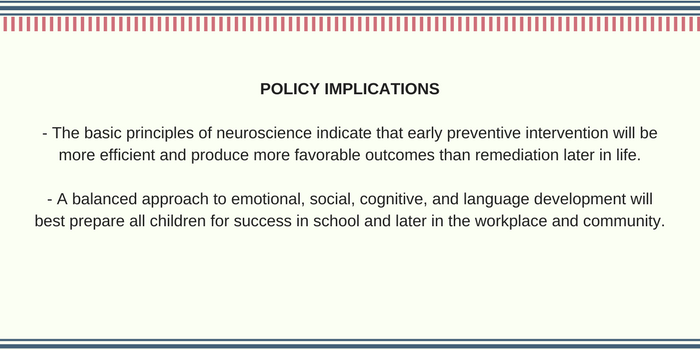 There is increasing acceptance of the evidence which shows that emotional development has a strong correlation to cognitive and learning skills. The Harvard University’s Center for Developing Child InBrief series “The Science of Early Childhood Development”, states “The emotional and physical health, social skills, and cognitive-linguistic capacities that emerge in the early years are all important prerequisites for success in school and later in the workplace and community.“
Dawn Dawson, Senior Director Office of Early Learning, WCPSS, says, “When children do not make appropriate choices, do not respond to adult direction, or do not display appropriate social skills, teacher may need to focus on behavioral issues rather than academics. We’ve found that children who come from a SEFEL-guided pre-K have the social skills that make them ready for success and learning in kindergarten.”
Using the Solution Suitcase
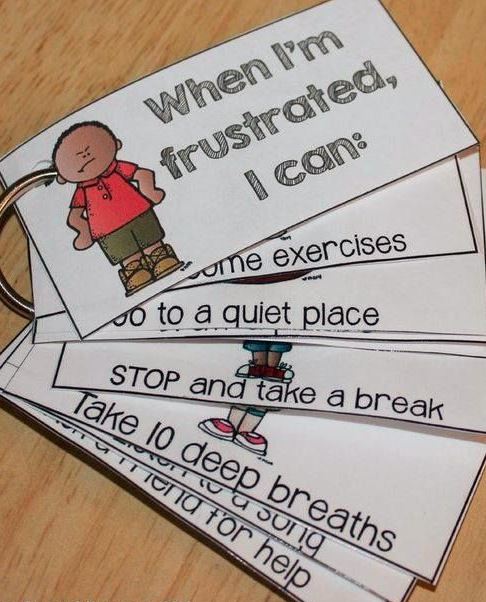 Under the SEFEL model of instruction, children are in supportive environments with nurturing relationships. They are guided to understand their emotions and their responsibilities. Now, when a young child is confronted by another child who pleads for the toy, there is an opportunity to learn. Using the Solution Suitcase, the teacher leads the four-year olds through possible strategies designed just for children such as take turns, play together, get a timer, or walk away. The children are learning the steps to resolution – I make eye contact then I say the person’s name. Next, I say the problem and give a solution.
At school and at home, the SEFEL framework is contributing to the positive mental health of our children.
Contact Gay Lytton, glytton@wcpss.net, to learn more about the Wake County Public School System’s implementation of the SEFEL framework.
- Center on the Social and Emotional Foundations for Early Learning (CSEFEL)
- UNC Frank Porter Graham Child Development Institute NC Early Learning Network
- UNC Frank Porter Graham Child Development Institute NC Early Learning Network: Improving Classrooms Video
The grant referenced in this story is part of our Positive Mental Health portfolio.